OFFICIAL GUIDE BEAR COUNTRY

The Complete Guide to
Bear Safety

Everything you need to know to stay safe in bear country

Explore
01

Know Your Bears

Accurate identification can save your life. Learn the key differences between black bears and grizzly bears.

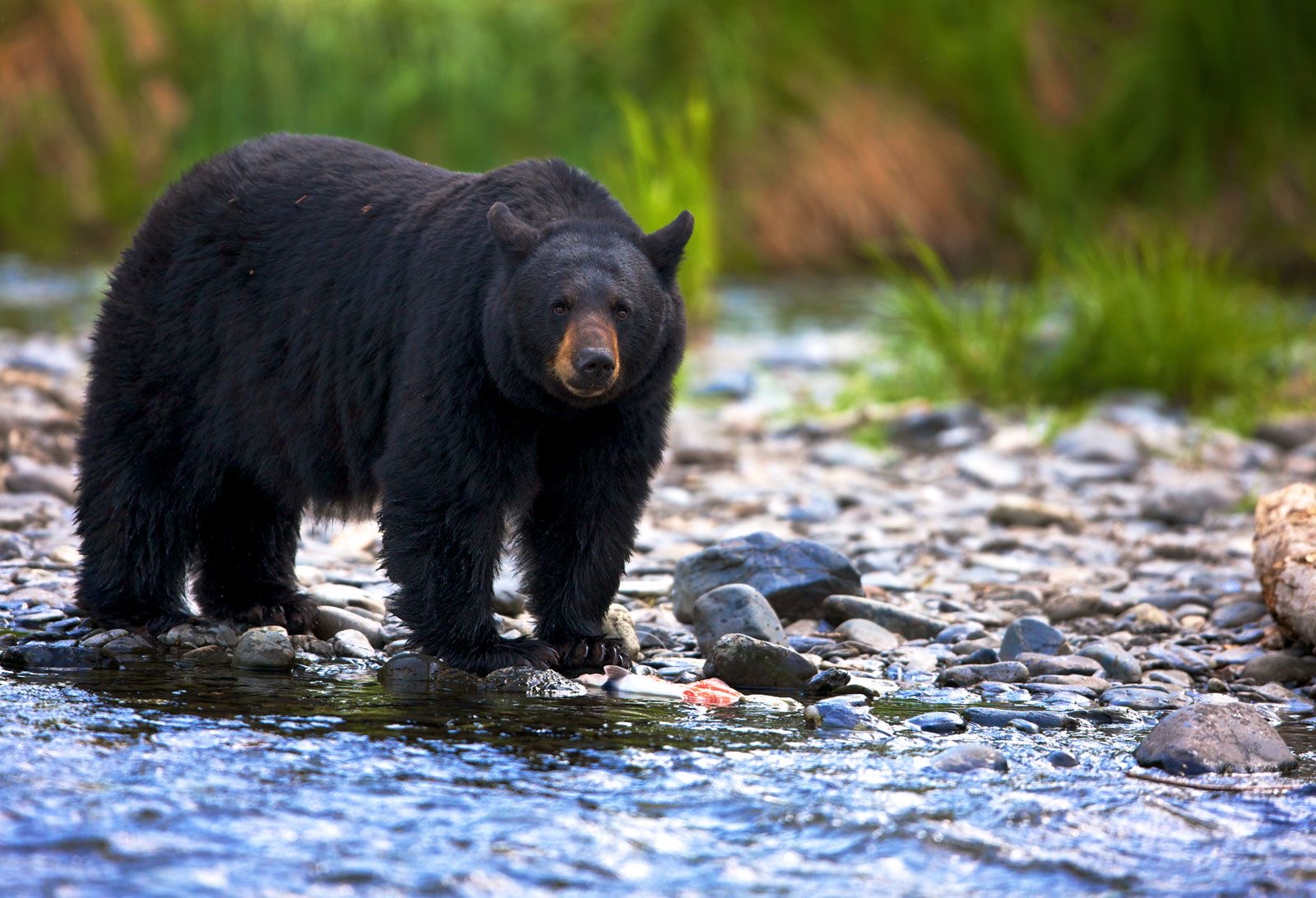
American Black Bear standing in a stream

Black Bear

Ursus americanus

Photo: Britannica / British Columbia
Weight (Male)130–660 lbs (avg ~250)
Weight (Female)88–331 lbs
Shoulder Height2–3.5 ft
Standing Height5–7 ft
Shoulder HumpNO — highest point is rump
Face ProfileStraight (Roman-nosed)
EarsTall, pointed, erect
Claws<2 in, dark, sharply curved
ClimbingExcellent tree climber
Population (N.A.)~600,000–900,000
US Range37–40 states
TemperamentLess aggressive, prefers to flee
ColorsBlack (70%), brown, cinnamon, blonde, blue-gray, cream/white
VS
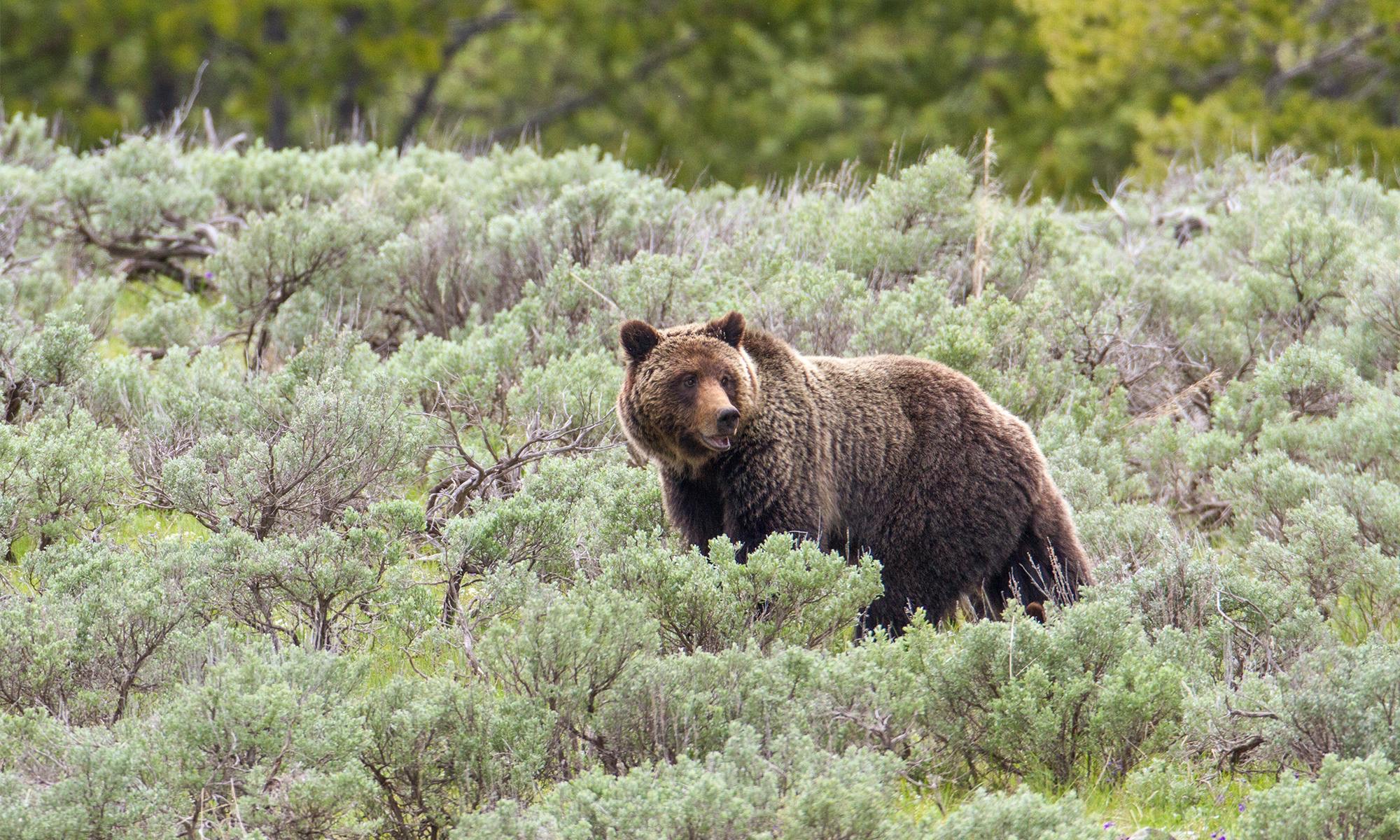
Grizzly bear sow in the wild

Grizzly Bear

Ursus arctos horribilis

Photo: Jim Peaco / NPS
Weight (Male)330–1,150 lbs (avg 400–600)
Weight (Female)270–770 lbs
Shoulder Height3–5 ft
Standing Height6–8 ft (up to 10 ft coastal)
Shoulder HumpYES — prominent, highest point
Face ProfileConcave / dished
EarsSmall, round
Claws2–4 in, light/pale, gently curved
ClimbingAdults cannot climb trees
Population (N.A.)~55,000–85,000 (~1,500–2,000 lower 48)
US Range5 states: AK, MT, WY, WA, ID
TemperamentMore aggressive, defensive attacks common
ColorsDark brown, blonde, reddish, nearly black, silver-tipped

🔍 Quick Identification Tips

Click each card to reveal the identification detail

1 Most reliable feature?
Shoulder Hump

Grizzlies have a prominent muscular hump. Black bears do not — their highest point is the rump.

2 Check the face profile
Dished = Grizzly

Grizzly bears have a concave, dished face profile. Black bears have a straight, Roman-nosed profile.

3 Can you rely on color?
NEVER rely on color alone!

Black bears can be brown, blonde, or cinnamon. Grizzlies can be nearly black. Color is unreliable.

4 Ear shape matters
Tall & Pointed = Black Bear

Black bears have tall, prominent, pointed ears. Grizzly ears are small and round, almost hidden in fur.

5 Look at the claws
Short & Dark = Black Bear

Black bear claws are <2", dark, curved. Grizzly claws are 2–4", pale/light, gently curved — built for digging.

02

Where Bears Live

Interactive range maps showing black bear and grizzly bear distribution across the United States.

Black Bear Present
No Black Bears

Hover over states to see details. Black bears are found in 40+ states across the US.

Grizzly Bear Present
No Grizzly Bears

Grizzly bears are found in only 5 US states, with Alaska holding the largest population.

03

How to Use Bear Spray

Bear spray is the single most effective tool for surviving a bear encounter. Learn how to use it properly.

Bear Spray 92%
Firearms 67%

Effectiveness at deterring aggressive bears — Smith et al., Journal of Wildlife Management

🌶️

Active Ingredient

Oleoresin capsicum (OC) derived from hot peppers. Causes immediate swelling of eyes, nose, throat, and lungs.

📏

Range

Shoots 16–40 feet depending on brand. Much farther than personal pepper spray or mace.

Legal Everywhere

Legal across the US and Canada. Carry it in a chest holster for instant access — never in your pack.

📅

Expiration

Replace every 3–4 years. Check the expiration date before every trip. Practice drawing from the holster.

How to Deploy Bear Spray — Step by Step

Memorize these six steps before you hit the trail. In a real encounter, you won't have time to think.

1

Carry It Ready

Keep bear spray in a chest or hip holster — never buried in your pack. You need it accessible within 2 seconds.

2

Remove Safety Clip

Flip the orange safety tab with your thumb in one swift motion. Practice this at home until it's muscle memory.

3

Wait

Don't spray too early. Let the bear close to 30–60 feet. Spraying at longer range wastes your limited supply.

4

Aim Low, Slightly Down

Point toward the ground in front of the bear, not at its face. The spray creates a cloud the bear runs into.

5

Spray 3–5 Seconds

Use short, firm bursts to build a wall of capsaicin between you and the bear. Adjust your aim as needed.

6

Back Slowly Away

Once the bear retreats, leave the area calmly. Do not run. Keep the canister ready in case it returns.

Bear Spray Demo — Cinematic Animation

Watch the full encounter sequence. The animation plays automatically and loops.

SPOT THE BEAR
! Aim slightly downward 2-3 second bursts Create a spray wall
Spot
Draw
Aim
Spray
Retreat
Back Away
04

Bear Attack Statistics

Data-driven insights on bear attack fatalities across North America from 2005 to 2025.

~73
Total fatalities 2005–2025
avg 3.5 per year
92%
Bear spray effectiveness
vs 67% for firearms
70%+
Attacks happen June–September
August is peak for grizzlies
⚡ > 🐻
You're more likely to be killed by lightning than by a bear

Bear Attack Fatalities by Year (2005–2025)

Fatalities by Species (2005–2025)

Attack Circumstances

Fatalities by Location (Top Regions)

📈

Trending upward: The 2020s average ~4.5 fatalities/year compared to ~3/year in the 2010s. Expanding human activity in bear habitat and growing bear populations contribute to increasing encounters.

05

Backpacking Gear List

Essential bear safety gear for your next backcountry trip. Filter by category and priority.

Essential
Best Overall

Counter Assault 10.2oz

$64–70
  • Range: 40 ft
  • Spray Time: 8 sec
  • Weight: 10.2 oz

Industry gold standard. Longest range available. Used by rangers and guides.

Essential
Best Value

Frontiersman MAX 9.2oz

$42–53
  • Range: 35–40 ft
  • Weight: 9.2 oz

Excellent performance at a lower price. Great choice for budget-conscious hikers.

Essential

UDAP 7.9oz

$45–60
  • Range: 30–35 ft
  • Weight: 7.9 oz — Lightest

Created by a grizzly attack survivor. Lightest option for ultralight backpackers.

Essential

Guard Alaska 9oz

$40–61
  • Range: 15–20 ft
  • Spray Time: 9 sec — Longest
  • Weight: 9 oz

Longest spray duration gives you extra chances. Shorter range requires more courage.

Essential
Most Popular

BearVault BV500

$80–100
  • Volume: 11.5L
  • Weight: 2 lb 8 oz

Clear lid lets you see contents. Easy to open for humans, impossible for bears. IGBC approved.

Essential

Counter Assault Bear Keg

$100–115
  • Volume: 11.7L
  • Weight: 3 lb 11 oz — Most Secure

Tank-like construction. Heaviest but most bear-resistant canister on the market.

Essential

Bare Boxer Champ

$95–105
  • Volume: 12L
  • Weight: 2 lb 10 oz

Widest regulatory acceptance. Approved in all major parks requiring canisters.

Essential
Best Budget

Garcia Backpacker's Cache

$70–85
  • Volume: 10L
  • Weight: 2 lb 11 oz

Original bear canister. Reliable and affordable. Slightly smaller capacity.

Ursack Major

$119–125
  • Weight: 7.6 oz
  • IGBC approved

Kevlar-like fabric resists bear teeth and claws. Fraction of the weight of hard canisters.

ULA Bear Bag Kit

$50
  • Weight: 4.8 oz
  • Complete PCT hang kit

Includes carabiner, line, and stuff sack. Popular on the Pacific Crest Trail.

Nice to Have

Zpacks Bear Bagging Kit

$50–60
  • Weight: 3.4 oz — Ultralight

Lightest bear bagging kit available. For dedicated gram-counters.

Essential

LOKSAK OPSAK Odor-Proof Bags

$14–16

Blocks all food odors. Use inside your canister or bear bag for double protection. Absolutely essential.

Frontiersman Air Horn 130dB

$12–15

Ear-splitting 130dB blast. Effective at scaring bears from a distance. Compact and lightweight.

Essential

Bear Spray Chest Holster

$15–35

Keeps bear spray instantly accessible on your chest. Never hike with spray in your pack.

Headlamp with Red Mode

$40–65

Red light preserves night vision and is less likely to attract curious wildlife to camp.

First Aid Kit

$25–50

Carry a wilderness-rated first aid kit. Include trauma bandages for worst-case scenarios.

⚠️
Bear bells are NOT recommended.

Studies show bear bells are largely ineffective. Bears may not hear them until too close, and the sound doesn't replicate human voices. Instead, talk loudly, clap, or call out "Hey bear!" regularly on the trail.

06

Bear Encounter Response Guide

An interactive decision tree to guide your response during a bear encounter.

Do you see a bear?

Make Noise & Leave

Make loud noises — talk, clap, call out "Hey bear!" Back away slowly from the area. Give the bear space to leave on its own.

Is the bear aware of you?

Quietly Back Away

Don't startle it. Detour widely around the bear. Move downwind so it doesn't catch your scent. Make gentle noise from a distance so the bear knows you're there without being surprised.

What species is it?

Treat It as a Grizzly

When in doubt, assume grizzly. Follow grizzly bear protocols — they are generally more dangerous. Look for the shoulder hump and dished face.

Is the black bear's behavior defensive or predatory?

Defensive: huffing, jaw-popping, swatting ground, ears back — usually a mother with cubs or surprised bear.
Predatory: stalking, following you, circling, intensely focused, no stress signals.

Stand Your Ground

  • Make yourself look big — raise arms, stand on rock
  • Talk firmly: "Hey bear, go away bear"
  • Use bear spray if it charges (within 30–40 ft)
  • Back away slowly when safe
  • Do NOT play dead with a black bear

FIGHT BACK with Everything

  • This is extremely rare but serious
  • Do NOT play dead — the bear sees you as prey
  • Use bear spray first
  • Fight aggressively: kick, punch, use rocks/sticks
  • Target the nose and eyes
  • Never give up — fight with everything you have
Is the grizzly's behavior defensive or predatory?

Defensive: huffing, jaw-popping, bluff charges, woofing — protecting cubs, food, or personal space.
Predatory: stalking silently, following persistently, approaching at night.

Use Bear Spray, Then Play Dead

  • Use bear spray if the bear charges within range
  • If contact is made: PLAY DEAD
  • Lie flat on stomach, face down
  • Clasp hands behind your neck
  • Spread legs to resist being flipped
  • Keep your pack on for protection
  • Stay still until the bear leaves the area
  • Wait several minutes before moving

FIGHT BACK — Do NOT Play Dead

  • A predatory grizzly will not stop if you play dead
  • Use bear spray immediately
  • Fight back aggressively
  • Use any weapon: rocks, sticks, trekking poles
  • Target the nose and eyes
  • Make as much noise as possible
  • This is a fight for survival — never give up
07

The Meadow Meeting

A short story about mutual respect in bear country

T

he morning mist hung low over Elk Meadow like a silver quilt, threading between stalks of wild lupine and the feathered tops of beargrass. The sun had barely climbed above the ridgeline when Huckleberry poked his nose out from behind a thicket of huckleberry bushes — his namesake and, not coincidentally, his breakfast.

Huckleberry was a two-year-old black bear, roughly the size of a large dog and still clumsy in the particular way that young bears are clumsy: all shoulders and curiosity, with paws that seemed a size too big for his ambitions. His mother had pushed him out on his own the previous spring, and he was still learning the rhythms of the mountain — which berries were ripe, which logs hid the fattest grubs, and which sounds meant danger.

This morning, a new sound caught his attention. Not the crack of a branch under elk hooves, not the scolding chatter of a squirrel. Something rhythmic. Something humming.

He lifted his nose and tested the air. The scent was sharp and strange — sunscreen, nylon, and something sweet like dried mango. Huckleberry's ears rotated forward like two fuzzy satellites. He rose onto his hind legs, swaying slightly, and peered over the bushes.

There, at the far edge of the meadow, walked a hiker. She had trekking poles that clicked against stone, a wide-brimmed hat, and a bright green pack. She was humming a song — something tuneless and cheerful — and she hadn't seen him yet.

Huckleberry dropped to all fours. His heart beat a little faster. His mother's lessons echoed in some deep corner of his brain: big creatures on two legs are trouble. But trouble was also interesting, and Huckleberry was, above all else, curious.

He took three cautious steps into the open. The dew soaked his belly fur. A grasshopper launched itself off his nose and he flinched — then felt embarrassed about it, the way only a young bear can.

The hiker stopped. She saw him.

For a long moment they regarded each other across sixty yards of wildflowers. The breeze carried the meadow between them — grass and pine and the faintest hint of snow from the peaks above.

The hiker spoke. Her voice was calm, low, almost musical. "Well, hello there, little bear. You're a handsome one, aren't you?" She didn't shout. She didn't run. She slowly raised her hands so she looked a little bigger, and she began stepping backward, one careful foot behind the other, still talking in that easy, steady tone.

"I'm just passing through your meadow. It's a beautiful meadow. I'll be out of your way in a minute."

Huckleberry sniffed once more. The strange scent was fading. The creature was leaving, just as his mother said the good ones do. He flicked his ears, turned his head to check for the grasshopper (it was gone), and then ambled back toward the huckleberry bushes. Breakfast was, after all, more interesting than anything that carried trekking poles.

The hiker crested the ridge ten minutes later. She paused, looked back over the meadow one last time, and smiled. Somewhere below, a young bear was eating berries in the mist, and the mountain went on being the mountain — vast, patient, and shared.

🐻 🌲 🏔️ 🌲 🐻